#1: Why Trust Frameworks Matter in AI-Powered Enterprises

As AI scales across industries, the transition from experimental models to mission-critical enterprise systems highlights a glaring vulnerability: trust. How can organizations rely on non-deterministic AI models to handle sensitive data, execute workflows, and make decisions? The answer lies in robust trust frameworks.
Navigating the Regulatory Landscape
The regulatory landscape for AI is tightening globally. From the EU AI Act to stringent data privacy laws, enterprises must prove their AI systems are safe, unbiased, and compliant. A trust framework acts as a bridge between technical AI operations and legal compliance, providing the necessary audit trails and verifiable governance.
Risk Mitigation and Business Value
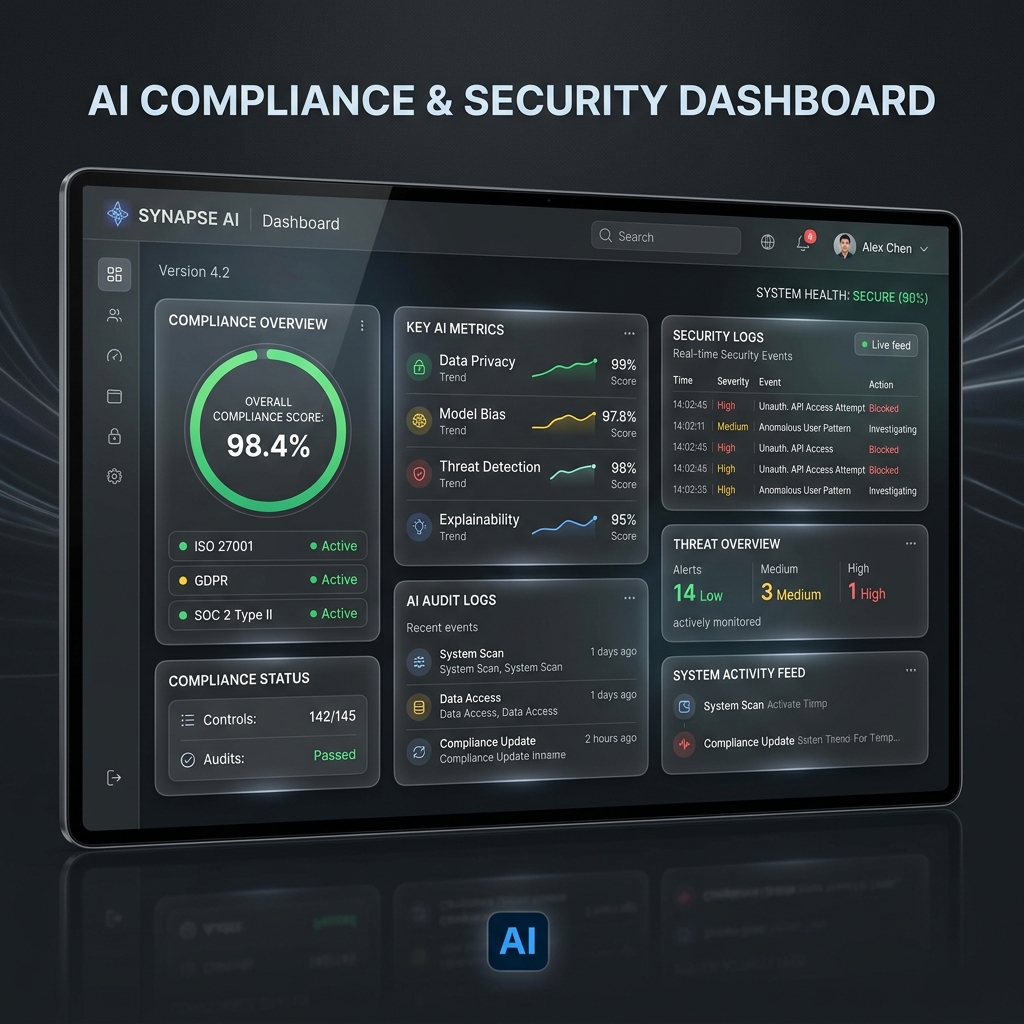
Trust frameworks mitigate risks associated with hallucinations, bias, and unauthorized data access. By establishing a deterministic layer of validation over probabilistic models, businesses can unlock the true value of AI without exposing themselves to catastrophic failures.
- Auditability: Generating immutable logs of AI decisions.
- Access Control: Ensuring AI only accesses permitted data silos.
- Performance Guarantees: Validating outputs against strict business logic before execution.
A Universal Necessity
Whether in finance, healthcare, or legal tech, the adoption of trust frameworks is no longer optional. It is the foundational layer that transforms AI from a risky novelty into a reliable enterprise engine.
Enterprise M&A Inquiry
For technical due diligence or architectural deep-dives into our zero-trust framework, please request access to our tech specs and roadmap.
Request Tech Specs