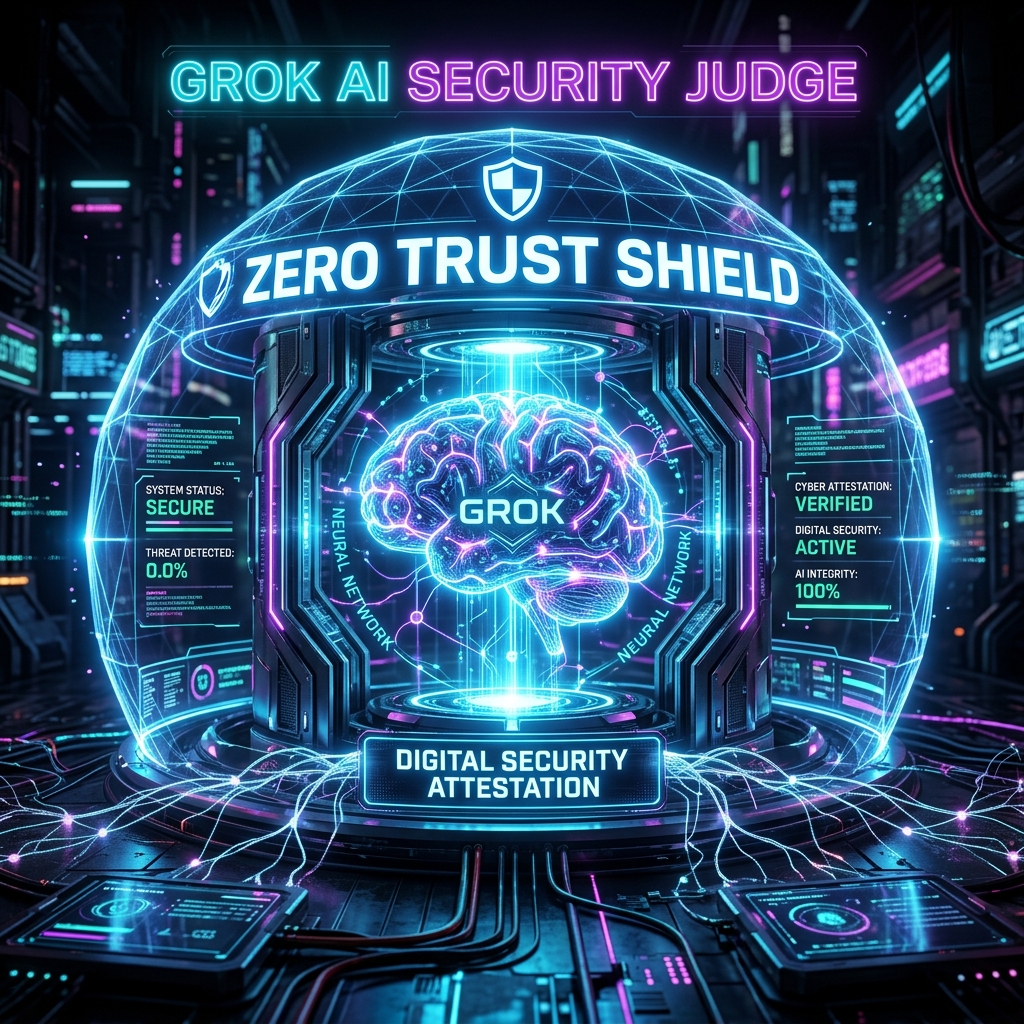
Trusted AI Validation Layer

Securing Autonomous
AI Transactions

A high-performance, Rust-based validation layer for AI agents. Ensuring every transaction is compliant, authorized, and cryptographically sound before it touches critical enterprise infrastructure or a blockchain.

Test the API β†’ Request Data-Room
atl-trust-core β€” validator
πŸ›‘οΈ
Live Intents Validated
3,492
⚑
Avg Latency
4.2ms
πŸ€–
Active Agents
128

Built for Enterprise Compliance

πŸ›‘οΈ

TEE Hardware Attestation

Cryptographic verification of execution environments. Ensures your AI agents are running exactly the code you deployed, untampered.

⚑

Rust Performance

Built with Tokio and Axum for extreme concurrency. Minimal memory footprint and sub-5ms response times for validation endpoints.

🚦

Dynamic Circuit Breakers

Hard limits, velocity checks, and anomaly detection prevent AI agents from executing runaway financial operations.

πŸ‡ͺπŸ‡Ί

MiCA/DORA Ready

Architected with European regulatory frameworks in mind. Extensive structured logging guarantees auditability for every single intent.

Developer First

Seamless Integration

Drop ATL-Trust between your AI Agents and your execution layer (blockchain/exchange). We intercept, validate, and sign intents in milliseconds.

Live Endpoint Tester

Awaiting network request...
terminal β€” curl
# Submit an intent to the validator curl -X POST https://api.atl-trust.com/v1/intent \ -H "Content-Type: application/json" \ -H "Authorization: Bearer sk_live_..." \ -d '{ "action": "TRANSFER", "asset": "USDC", "value": 150, "semantic_hash": "e3b0c44298fc1c149afbf4..." }' # Valid Response (200 OK) { "status": "INTENT_APPROVED", "signature": "0x4b2c...", "latency": "4.2ms" }

Zero-Trust Architecture

ATL-Trust operates on a strict zero-trust model. Our execution framework assumes every AI intent is fully compromised until cryptographic validation proves otherwise.

  • Hardware Isolated: Keys are managed via isolated enclaves, ensuring private keys never touch the AI's execution memory.
  • Immutable Audit Trails: Every validation request generates a cryptographically hashed log for EU AI Act compliance.
  • Air-Gapped Telemetry: Validator nodes run completely isolated from the primary LLM pathways, neutralizing prompt-injection hijacking.
πŸ›‘οΈ

Validation Enclave Active

βœ“ LLM Prompt Filtered
βœ“ Semantic Hash Verified
βœ“ Intent Signed Locally

Thought Leadership

Series 1/15

Why Trust Frameworks Matter in AI-Powered Enterprises

Series 2/15

Demystifying Hardware-Attested Compliance Checks

Series 3/15

The Anatomy of a Secure Data-Room for AI Acquisitions

Series 4/15

How Teleport-Based Identity Frameworks Enable Zero-Trust AI

Series 5/15

Building a Scalable AI Validator: Architectural Best Practices

Series 6/15

From Prototype to Production: Lessons from Deploying ATL-Trust

Series 7/15

Compliance-Ready AI: Aligning with EU AI Act & GDPR

Series 8/15

Cassandra’s Curse – Dr Hannah Fry’s $100 Experiment

Series 9/15

Zero-Trust Architecture for Autonomous AI Agents

Series 10/15

The Mexico City Federal Breach (Dec 2025 – Feb 2026)

Series 11/15

The Future of Enterprise AI: Navigating Non-Deterministic Behavior

Series 12/15

Hardware-Attested AI Isolation on Google Cloud Confidential VMs

Series 13/15

Zero-Leak AI Workloads: Deploying ATL-Trust inside AWS Nitro Enclaves

Series 14/15

Cryptographic Integrity at the Silicon Layer: Attesting Nvidia Confidential GPUs

Get in Touch