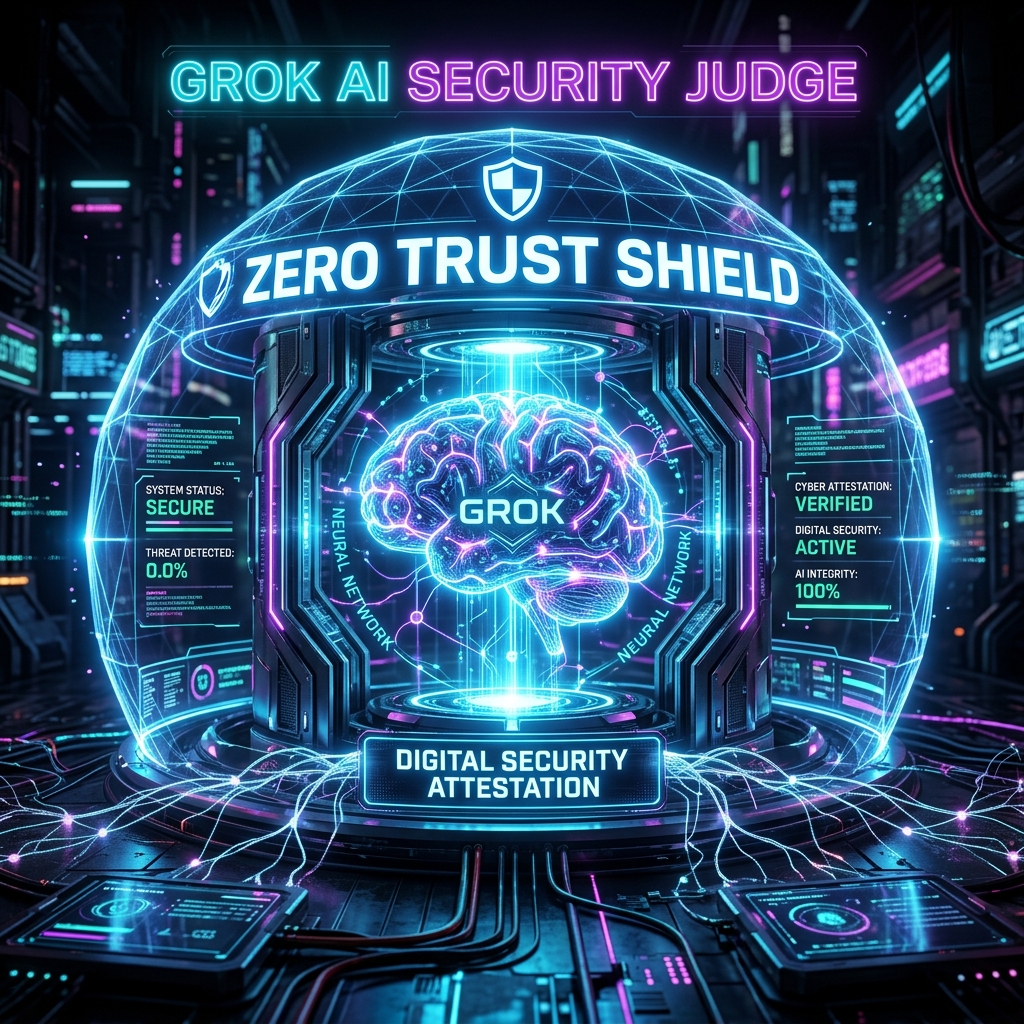
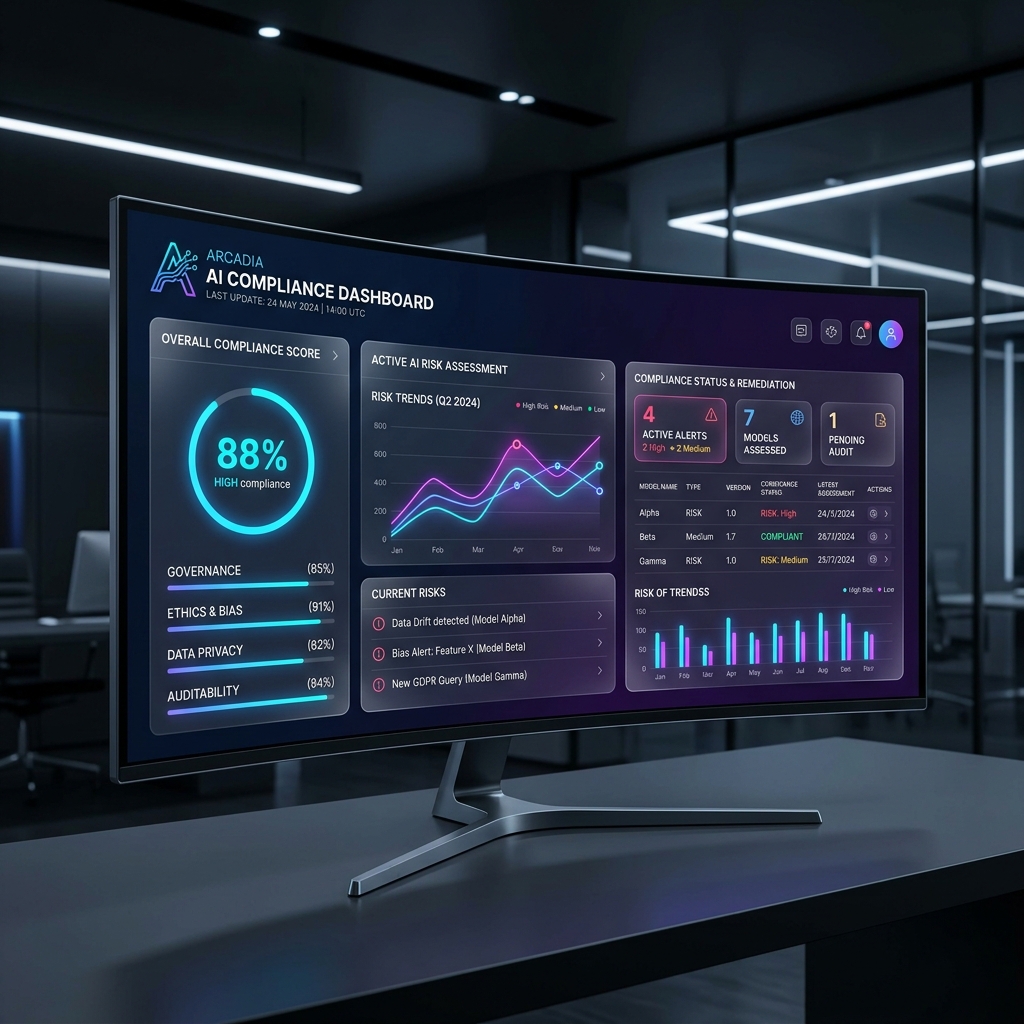
Trusted AI Validation Layer

Securing Autonomous
AI Transactions

A high-performance, Rust-based validation layer for AI agents. Ensuring every transaction is compliant, authorized, and cryptographically sound before it touches critical enterprise infrastructure or a blockchain.

View Risk Dashboard β†’ See How It Works Request Tech Specs
atl-trust-core β€” validator
πŸ›‘οΈ
Test Coverage
100%
⚑
Target Latency
< 5ms
πŸ€–
Core Rules
20+

Built for Enterprise Compliance

πŸ›‘οΈ

TEE Hardware Attestation

Cryptographic verification of execution environments. Ensures your AI agents are running exactly the code you deployed, untampered.

⚑

Rust Performance

Built with Tokio and Axum for extreme concurrency. Minimal memory footprint and sub-5ms response times for validation endpoints.

🚦

Dynamic Circuit Breakers

Hard limits, velocity checks, and anomaly detection prevent AI agents from executing runaway financial operations.

πŸ‡ͺπŸ‡Ί

MiCA/DORA Ready

Architected with European regulatory frameworks in mind. Extensive structured logging guarantees auditability for every single intent.

Developer First

Seamless Integration Design

ATL-Trust is architected to slot between your AI Agents and your execution layer (blockchain/exchange). It intercepts, validates, and signs intents in milliseconds.

Core Concept Simulator

Awaiting simulation request...
terminal β€” curl
# Submit an intent to the validator (Simulated API Example) curl -X POST https://api-sim.atl-trust.com/v1/intent \ -H "Content-Type: application/json" \ -H "Authorization: Bearer sk_test_..." \ -d '{ "action": "TRANSFER", "asset": "USDC", "value": 150, "semantic_hash": "e3b0c44298fc1c149afbf4..." }' # Simulated Response (200 OK) { "status": "INTENT_APPROVED", "signature": "0x4b2c...", "latency": "4.2ms" }
Edge Privacy

Confidential Data Redaction Sandbox

ATL-Trust intercepts outgoing prompt context, deterministically redacts sensitive datasets (SSNs, emails, credit cards, names) at the local edge, and seamlessly re-identifies them when returning LLM responses.

Edge Redactor Console

Sandbox: ISOLATED
Awaiting sandboxed simulation sequence...
VPC Edge Secure Memory (Local Map)
// Local memory mapping is empty. Run Step 1 to populate. {}
EU AI Act Compliance

Cryptographic Tamper-Proof Ledger

ATL-Trust structures every validation event into a sequentially chained blockchain ledger. If an administrator, insider, or attacker attempts to alter a historical transaction or delete a log entry, the signature verification breaks instantly.

Ledger Controls

Chained ledger active. Ready for verification sequence.
Audit Ledger Block Inspector (Select block)
// Click on any Block in the chain sequence to inspect its fields.

Zero-Trust Architecture

ATL-Trust operates on a strict zero-trust model. Our execution framework assumes every AI intent is fully compromised until cryptographic validation proves otherwise.

  • Hardware Isolated: Keys are managed via isolated enclaves, ensuring private keys never touch the AI's execution memory.
  • Immutable Audit Trails: Every validation request generates a cryptographically hashed log for EU AI Act compliance.
  • Air-Gapped Telemetry: Validator nodes run completely isolated from the primary LLM pathways, neutralizing prompt-injection hijacking.
πŸ›‘οΈ

Validation Enclave (Design Model)

βœ“ LLM Prompt Filtered
βœ“ Semantic Hash Verified
βœ“ Intent Signed Locally

Thought Leadership

Series 1/75

Why Trust Frameworks Matter in AI-Powered Enterprises

Series 2/75

Demystifying Hardware-Attested Compliance Checks

Series 3/75

The Anatomy of a Secure Data-Room for AI Acquisitions

Series 4/75

How Teleport-Based Identity Frameworks Enable Zero-Trust AI

Series 5/75

Building a Scalable AI Validator: Architectural Best Practices

Series 6/75

From Prototype to Production: Lessons from Deploying ATL-Trust

Series 7/75

Compliance-Ready AI: Aligning with EU AI Act & GDPR

Series 8/75

Cassandra’s Curse – Dr Hannah Fry’s $100 Experiment

Series 9/75

Zero-Trust Architecture for Autonomous AI Agents

Series 10/75

The Mexico City Federal Breach (Dec 2025 – Feb 2026)

Series 11/75

The Future of Enterprise AI: Navigating Non-Deterministic Behavior

Series 12/75

Hardware-Attested AI Isolation on Google Cloud Confidential VMs

Series 13/75

Zero-Leak AI Workloads: Deploying ATL-Trust inside AWS Nitro Enclaves

Series 14/75

Cryptographic Integrity at the Silicon Layer: Attesting Nvidia Confidential GPUs

Series 15/75

Secure Multi-Cloud Verification: Testing ATL-Trust on AWS, Azure, GCP, and Locally

Series 16/75

Mitigating Prompt Injection: Designing Robust Intent Filtering for Autonomous Agents

Series 17/75

The Power of Real-Time Semantic Hash Verification in User Protection

Series 18/75

Defending Against Bad Agents: Behavioral Isolation in Multi-Agent Ecosystems

Series 19/75

Deterministic Guardrails vs. Probabilistic Models: The Safe AI Sandbox

Series 20/75

User Consent Frameworks: Implementing Cryptographic Handshakes for High-Value Transactions

Series 21/75

Anatomy of an AI Circuit Breaker: Preventing Runaway Loops and Resource Exhaustion

Series 22/75

Confidential Data Redaction: Ensuring AI Agents Respect Privacy at the Edge

Series 23/75

Attestation and Auditing: How to Create Tamper-Proof Logs of AI Actions for the EU AI Act

Series 24/75

Threat Modeling for Autonomous Systems: A Guide to Secure AI Workflows

Series 25/75

The Future of Human-Agent Coexistence: Designing for Ultimate Trust and Safety

Series 26/75

Validating High-Frequency API Intents in Rust

Series 27/75

The Math of Tamper-Evident Ledger Hashing

Series 28/75

Preventing OS Shell Command Injections at the Prompt Layer

Series 29/75

Reversible Data Redaction: Securing Personal Context Locally

Series 30/75

Dynamic Transaction Rate Limiting and AI Circuit Breakers

Series 31/75

Attesting Multi-Signature Workflows via TEE Enclaves

Series 32/75

GDPR Compliance at the Edge: Local Prompt Anonymization

Series 33/75

Zero-Latency Policy Engines: Compiling Compile-Time Logic Gates

Series 34/75

Integrating Teleport AIF for Identity Attestation in AI Chains

Series 35/75

Mitigating Indirect Prompt Injection from Scraped Context

Series 36/75

Securing Autonomous watchOS Workflows on Mobile Clients

Series 37/75

Intel SGX vs. AWS Nitro: A TEE Comparison for AI Workloads

Series 38/75

Zero-Knowledge Proofs for User Policy Consent Validation

Series 39/75

Ledger Replication and Consensus in Distributed Audit Logs

Series 40/75

Scrubbing SQL Comments to Prevent Database Prompt Hijacking

Series 41/75

Improving Name and Identity Redaction using Heuristic Regexes

Series 42/75

Handling Non-Deterministic Intent Parsing in Agent Workflows

Series 43/75

Designing Compliant AI for Financial Transactions (USDC & BTC)

Series 44/75

Validating Hardware Root-of-Trust via Intel/Google Root CAs

Series 45/75

Managing Memory Limits in Low-Latency Edge Redaction Routers

Series 46/75

Edge-Based Re-identification: Restoring Placeholders safely

Series 47/75

Preventing Privilege Escalation in Autonomous Agent Databases

Series 48/75

Regulatory Auditing under the EU AI Act: A Checklist

Series 49/75

Building a Sandbox Attestation Client: Safe Agent Execution

Series 50/75

The Zero-Trust AI Roadmap: Navigating the Autonomous Future

Series 26/75

Validating High-Frequency API Intents in Rust

Series 27/75

The Math of Tamper-Evident Ledger Hashing

Series 28/75

Preventing OS Shell Command Injections at the Prompt Layer

Series 29/75

Reversible Data Redaction: Securing Personal Context Locally

Series 30/75

Dynamic Transaction Rate Limiting and AI Circuit Breakers

Series 31/75

Attesting Multi-Signature Workflows via TEE Enclaves

Series 32/75

GDPR Compliance at the Edge: Local Prompt Anonymization

Series 33/75

Zero-Latency Policy Engines: Compiling Compile-Time Logic Gates

Series 34/75

Integrating Teleport AIF for Identity Attestation in AI Chains

Series 35/75

Mitigating Indirect Prompt Injection from Scraped Context

Series 36/75

Securing Autonomous watchOS Workflows on Mobile Clients

Series 37/75

Intel SGX vs. AWS Nitro: A TEE Comparison for AI Workloads

Series 38/75

Zero-Knowledge Proofs for User Policy Consent Validation

Series 39/75

Ledger Replication and Consensus in Distributed Audit Logs

Series 40/75

Scrubbing SQL Comments to Prevent Database Prompt Hijacking

Series 41/75

Improving Name and Identity Redaction using Heuristic Regexes

Series 42/75

Handling Non-Deterministic Intent Parsing in Agent Workflows

Series 43/75

Designing Compliant AI for Financial Transactions (USDC & BTC)

Series 44/75

Validating Hardware Root-of-Trust via Intel/Google Root CAs

Series 45/75

Managing Memory Limits in Low-Latency Edge Redaction Routers

Series 46/75

Edge-Based Re-identification: Restoring Placeholders safely

Series 47/75

Preventing Privilege Escalation in Autonomous Agent Databases

Series 48/75

Regulatory Auditing under the EU AI Act: A Checklist

Series 49/75

Building a Sandbox Attestation Client: Safe Agent Execution

Series 50/75

The Zero-Trust AI Roadmap: Navigating the Autonomous Future

EU AI Act Compliance for Agentic Systems: Article 6 & High-Risk Rules
Regulatory Compliance - Series 51/75
September 8, 2026 β€’ 9 min read

EU AI Act Compliance for Agentic Systems: Article 6 & High-Risk Rules

The European AI Act establishes strict rules for high-risk autonomous AI systems. Explore how to map Article 6 requirements directly to deterministic runtime guardrails.

Read Full Analysis β†’
Article 14 Human Oversight: Designing Circuit Breakers for Autonomous Workflows
Regulatory Compliance - Series 52/75
September 11, 2026 β€’ 8 min read

Article 14 Human Oversight: Designing Circuit Breakers for Autonomous Workflows

Article 14 mandates effective human oversight ('Human-in-the-Loop') for high-risk AI. Learn how to implement dynamic circuit breakers that pause execution for human approval.

Read Full Analysis β†’
Fundamental Rights Impact Assessments (FRIA) for Enterprise AI Runtimes
Regulatory Compliance - Series 53/75
September 14, 2026 β€’ 8 min read

Fundamental Rights Impact Assessments (FRIA) for Enterprise AI Runtimes

Deployers of high-risk AI under the EU AI Act must perform a Fundamental Rights Impact Assessment. Discover how to technicalize FRIA controls into edge validators.

Read Full Analysis β†’
Prohibited AI Practices under Article 5: A Developer's Guide to Boundary Isolation
Regulatory Compliance - Series 54/75
September 17, 2026 β€’ 8 min read

Prohibited AI Practices under Article 5: A Developer's Guide to Boundary Isolation

Article 5 of the EU AI Act bans subliminal manipulation, social scoring, and untargeted scraping. Learn how to build boundary isolation filters.

Read Full Analysis β†’
Conformity Assessments and CE Marking for Autonomous Agent Platforms
Regulatory Compliance - Series 55/75
September 20, 2026 β€’ 9 min read

Conformity Assessments and CE Marking for Autonomous Agent Platforms

High-risk AI systems must undergo conformity assessments before affixing the CE mark. We outline the technical validation artifacts required for certification.

Read Full Analysis β†’
Post-Market Monitoring under Article 72: Real-Time Telemetry and Audit Logs
Regulatory Compliance - Series 56/75
September 23, 2026 β€’ 8 min read

Post-Market Monitoring under Article 72: Real-Time Telemetry and Audit Logs

Compliance doesn't end at deployment. Article 72 requires continuous post-market monitoring. Learn how to build real-time compliance telemetry.

Read Full Analysis β†’
Transparency Obligations under Article 50: Synthetic Content & Disclosure Gateway
Regulatory Compliance - Series 57/75
September 26, 2026 β€’ 7 min read

Transparency Obligations under Article 50: Synthetic Content & Disclosure Gateway

Article 50 requires disclosing when users interact with AI or when synthetic content is generated. Explore gateway-level transparency injection.

Read Full Analysis β†’
General Purpose AI (GPAI) Model Governance: Systemic Risk Controls
Regulatory Compliance - Series 58/75
September 29, 2026 β€’ 8 min read

General Purpose AI (GPAI) Model Governance: Systemic Risk Controls

Providers of General Purpose AI models face specialized obligations under the EU AI Act. Learn how to build systemic risk controls around GPAI models.

Read Full Analysis β†’
Navigating EU AI Office Regulatory Sandboxes: Safe Testing Environments
Regulatory Compliance - Series 59/75
October 2, 2026 β€’ 8 min read

Navigating EU AI Office Regulatory Sandboxes: Safe Testing Environments

Regulatory sandboxes established by national authorities allow testing of innovative AI. Discover how to configure enclave-based sandbox environments.

Read Full Analysis β†’
Penalties and Enforcement under the EU AI Act: Avoiding €35M Compliance Fines
Regulatory Compliance - Series 60/75
October 5, 2026 β€’ 8 min read

Penalties and Enforcement under the EU AI Act: Avoiding €35M Compliance Fines

Fines under the EU AI Act reach up to €35M or 7% of global turnover. We analyze how deterministic guardrails prevent fineable compliance breaches.

Read Full Analysis β†’
Defending Agentic RAG Systems Against Indirect Prompt Injections
AI Safety & Architecture - Series 61/75
October 8, 2026 β€’ 8 min read

Defending Agentic RAG Systems Against Indirect Prompt Injections

Retrieval-Augmented Generation (RAG) introduces severe vulnerability vectors when scraped documents contain hidden instructions. Explore defense strategies.

Read Full Analysis β†’
Zero-Trust State Machines for Multi-Agent LLM Orchestrators
AI Safety & Architecture - Series 62/75
October 11, 2026 β€’ 9 min read

Zero-Trust State Machines for Multi-Agent LLM Orchestrators

Orchestrating multi-agent systems requires enforcing state transition rules. Learn how to build zero-trust state machines in Rust.

Read Full Analysis β†’
Cryptographic Nonce Verification for Tool-Calling Safety
AI Safety & Architecture - Series 63/75
October 14, 2026 β€’ 8 min read

Cryptographic Nonce Verification for Tool-Calling Safety

Replay attacks can trick AI agents into executing identical database writes multiple times. Explore cryptographic nonce verification for tool calls.

Read Full Analysis β†’
Red-Teaming Autonomous Agent Swarms: Threat Vectors and Mitigations
AI Safety & Architecture - Series 64/75
October 17, 2026 β€’ 9 min read

Red-Teaming Autonomous Agent Swarms: Threat Vectors and Mitigations

Red-teaming autonomous agents requires testing against jailbreaks, privilege escalation, and memory poisoning. We detail attack methodologies and defenses.

Read Full Analysis β†’
Preventing Side-Channel Memory Leakage in Local AI Gateways
AI Safety & Architecture - Series 65/75
October 20, 2026 β€’ 8 min read

Preventing Side-Channel Memory Leakage in Local AI Gateways

Timing attacks and memory remnants can leak sensitive data from local LLM gateways. Discover constant-time execution and memory scrubbing techniques.

Read Full Analysis β†’
Zero-Knowledge Attribute Proofs for Agent Privilege Authorization
AI Safety & Architecture - Series 66/75
October 23, 2026 β€’ 8 min read

Zero-Knowledge Attribute Proofs for Agent Privilege Authorization

Agents must prove they possess authorization credentials without exposing sensitive user identity keys. Explore ZK attribute proof implementations.

Read Full Analysis β†’
Hardening Vector Databases Against Semantic Index Poisoning
AI Safety & Architecture - Series 67/75
October 26, 2026 β€’ 8 min read

Hardening Vector Databases Against Semantic Index Poisoning

Vector databases (Pinecone, Qdrant, Milvus) can be poisoned with adversarial embeddings. Discover semantic index hardening patterns.

Read Full Analysis β†’
Ephemeral Key Management inside Silicon-Level TEE Enclaves
AI Safety & Architecture - Series 68/75
October 29, 2026 β€’ 8 min read

Ephemeral Key Management inside Silicon-Level TEE Enclaves

Long-lived keys stored on disk are vulnerable to host compromise. Learn how to generate ephemeral signing keys inside TEE enclaves.

Read Full Analysis β†’
Detecting Recursive Prompt Hijacking in Multi-Step Reasoning Loops
AI Safety & Architecture - Series 69/75
November 1, 2026 β€’ 8 min read

Detecting Recursive Prompt Hijacking in Multi-Step Reasoning Loops

When an agent executes multi-step reasoning loops, subtle injections can compound recursively across iterations. Explore recursive loop screening.

Read Full Analysis β†’
ISO/IEC 42001 AI Management System Integration with Zero-Trust Guardrails
Regulatory Compliance - Series 70/75
November 4, 2026 β€’ 9 min read

ISO/IEC 42001 AI Management System Integration with Zero-Trust Guardrails

ISO/IEC 42001 is the international standard for AI Management Systems (AIMS). Discover how to map ISO controls to ATL-Trust guardrails.

Read Full Analysis β†’
Securing Model Context Protocol (MCP) Servers: Gateway Controls
AI Safety & Architecture - Series 71/75
November 7, 2026 β€’ 8 min read

Securing Model Context Protocol (MCP) Servers: Gateway Controls

The Model Context Protocol (MCP) standardizes how models connect to tools and data. Learn how to secure MCP servers using proxy validation gateways.

Read Full Analysis β†’
Deterministic Fallback Patterns for Agent Logic Failures
AI Safety & Architecture - Series 72/75
November 10, 2026 β€’ 8 min read

Deterministic Fallback Patterns for Agent Logic Failures

When an agent hallucinates or produces unparseable outputs, systems must fail safely. Explore deterministic fallback patterns.

Read Full Analysis β†’
Auditing Autonomous Financial Settlement Agents: Ledger Mechanics
AI Safety & Architecture - Series 73/75
November 13, 2026 β€’ 9 min read

Auditing Autonomous Financial Settlement Agents: Ledger Mechanics

Financial settlement agents that execute micro-payments or trade executions require continuous auditing. We break down ledger settlement checks.

Read Full Analysis β†’
Cross-Border Data Sovereignty for Cloud AI Workloads under NIS2
Regulatory Compliance - Series 74/75
November 16, 2026 β€’ 8 min read

Cross-Border Data Sovereignty for Cloud AI Workloads under NIS2

The NIS2 directive and GDPR enforce strict data sovereignty rules. Discover how local edge nodes keep prompt data within sovereign borders.

Read Full Analysis β†’
The Future of Autonomous Safety: A 2030 Vision for Human-Agent Harmony
Thought Leadership - Series 75/75
November 19, 2026 β€’ 10 min read

The Future of Autonomous Safety: A 2030 Vision for Human-Agent Harmony

Looking ahead to 2030, autonomous AI agents will manage complex enterprise operations. We detail the roadmap for permanent human-agent safety.

Read Full Analysis β†’

Get in Touch