Fundamental Rights Impact Assessments (FRIA) for Enterprise AI Runtimes
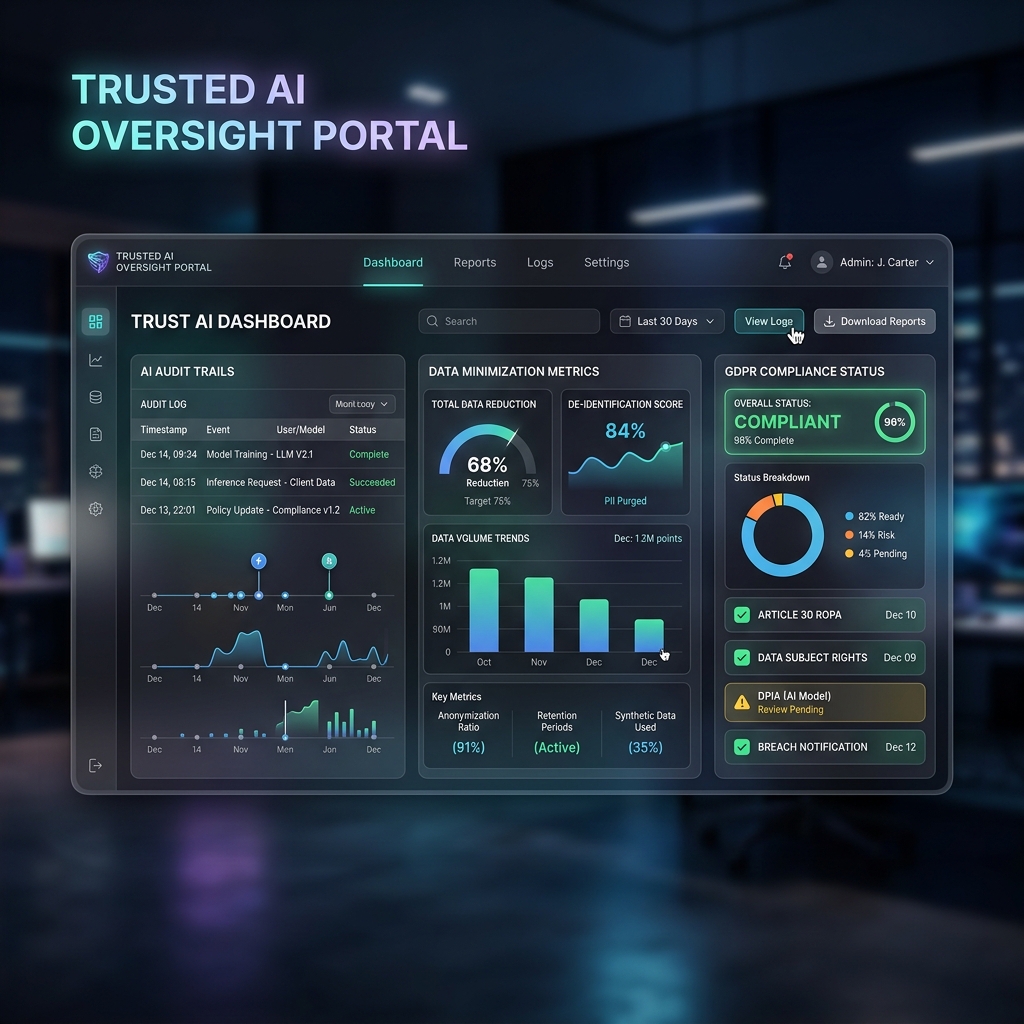
Deployers of high-risk AI under the EU AI Act must perform a Fundamental Rights Impact Assessment. Discover how to technicalize FRIA controls into edge validators.
Technicalizing FRIA Controls at the Network Edge
A Fundamental Rights Impact Assessment (FRIA) requires organizations to evaluate how AI deployment affects privacy, non-discrimination, and fundamental freedoms. Translating a legal FRIA document into active engineering controls is a critical challenge for enterprise CTOs.
ATL-Trust operationalizes FRIA guidelines by enforcing data-minimization policies at the local gateway. Personal identification attributes are redacted before reaching public reasoning APIs, protecting citizen rights by design.
// FRIA privacy check in redact.rs
let placeholder = format!("[ANONYMIZED_ID_{}]", idx);
redacted_text = redacted_text.replace(&pii_match, &placeholder);
Continuous Bias and Privacy Verification
By keeping PII mapping keys inside ephemeral local RAM, our edge redaction engine ensures that personal context is never stored in third-party training data or external model logs.
This technical separation provides concrete evidence for regulatory compliance officers during post-deployment FRIA audits.
- Translates legal FRIA requirements into automated edge checks.
- Enforces local data minimization under strict regional boundaries.
- Protects fundamental user rights across multi-agent workflows.
Enterprise M&A Inquiry
For technical due diligence or architectural deep-dives into our zero-trust framework, please request access to our tech specs and roadmap.
Request Tech Specs