Anatomy of an AI Circuit Breaker: Preventing Runaway Loops and Resource Exhaustion
Technical blueprints for constructing low-latency, deterministic watchdogs and circuit breakers to halt runaway recursive loops in autonomous AI agents.
Publication-grade 20+ page technical manuals, compiled Rust/Python PEP code gates, EU AI Act compliance matrices, and CISO audit checklists. Instant digital delivery secured by Stripe.
Technical blueprints for constructing low-latency, deterministic watchdogs and circuit breakers to halt runaway recursive loops in autonomous AI agents.
When external models respond, placeholders must be swapped back before they reach users. We detail restore logic in redact.rs.
Article 14 mandates effective human oversight ('Human-in-the-Loop') for high-risk AI. Learn how to implement dynamic circuit breakers that pause execution for human approval.
How to architect a cryptographically signed, immutable audit log of autonomous agent decisions to achieve EU AI Act and GDPR compliance.
When agents request high-value actions, they must verify their environment cryptographically. Explore multi-sig attestation checks.
Financial settlement agents that execute micro-payments or trade executions require continuous auditing. We break down ledger settlement checks.
Learn how ATL-Trust is architected to use AWS Nitro Enclaves and cryptographic attestation documents to isolate sensitive LLM model weights and API keys.
Why sandboxing and strict boundary policies are critical to preventing lateral security compromise in complex multi-agent software networks.
Agents must attest they are running inside isolated environments. We review sandbox signature checks.
A $100 βburn-loopβ experiment on an autonomous AI assistant revealed the biggest social-engineering risk in modern AI agents and how ATL-TRUSTβs deterministic brakes stop it.
Practical steps to ensure your AI service meets EU AI Act and GDPR requirements.
A guide to implementing local, low-latency redaction pipelines to scrub PII and regulatory data before sending context to third-party LLMs.
High-risk AI systems must undergo conformity assessments before affixing the CE mark. We outline the technical validation artifacts required for certification.
The NIS2 directive and GDPR enforce strict data sovereignty rules. Discover how local edge nodes keep prompt data within sovereign borders.
Replay attacks can trick AI agents into executing identical database writes multiple times. Explore cryptographic nonce verification for tool calls.
Retrieval-Augmented Generation (RAG) introduces severe vulnerability vectors when scraped documents contain hidden instructions. Explore defense strategies.
When agents trade or handle digital assets, verifying asset types and limits is essential. We check asset whitelists.
When an agent executes multi-step reasoning loops, subtle injections can compound recursively across iterations. Explore recursive loop screening.
When an agent hallucinates or produces unparseable outputs, systems must fail safely. Explore deterministic fallback patterns.
An in-depth analysis of why probabilistic safety filters inside LLMs fail, and how compiled, deterministic sandboxes secure enterprise applications.
Runaway execution loops in autonomous agents can cost thousands of dollars in minutes. Learn how dynamic circuit breakers prevent infinite retries.
Why enterprise adoption of Large Language Models is stalling due to compliance and how ATL-TRUST's deterministic guardrails provide the ultimate solution.
Long-lived keys stored on disk are vulnerable to host compromise. Learn how to generate ephemeral signing keys inside TEE enclaves.
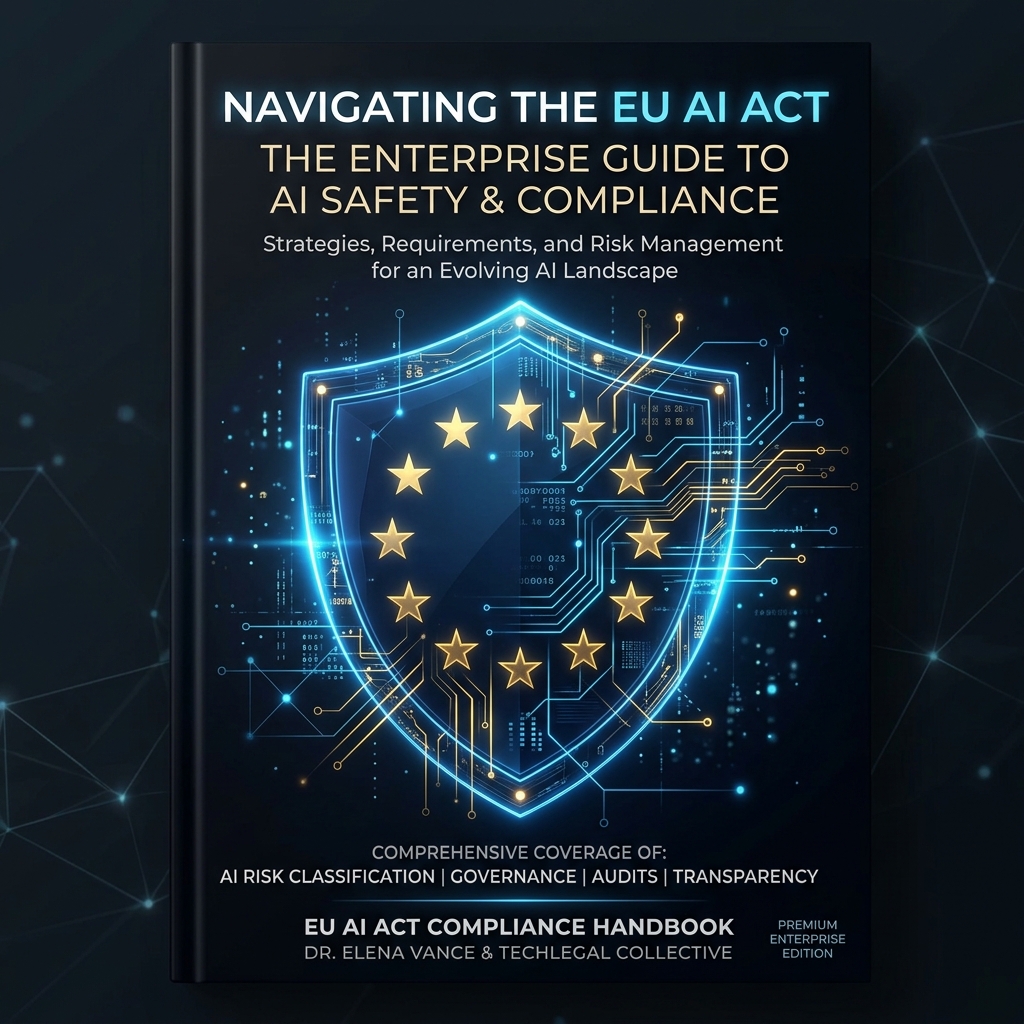
The European AI Act establishes strict rules for high-risk autonomous AI systems. Explore how to map Article 6 requirements directly to deterministic runtime guardrails.
Regulatory sandboxes established by national authorities allow testing of innovative AI. Discover how to configure enclave-based sandbox environments.
Deployers of high-risk AI under the EU AI Act must perform a Fundamental Rights Impact Assessment. Discover how to technicalize FRIA controls into edge validators.
A forward-looking analysis of how cryptographic validation, isolated enclaves, and deterministic policies lay the foundation for safe human-agent collaboration.
Looking ahead to 2030, autonomous AI agents will manage complex enterprise operations. We detail the roadmap for permanent human-agent safety.
An architectural blueprint of how ATL-Trust is designed to use GCP Confidential VMs and AMD SEV-SNP hardware attestation to isolate memory.
Sending raw citizen data to overseas LLM clusters violates GDPR data-transfer rules. Edge prompt anonymization provides a solution.
Providers of General Purpose AI models face specialized obligations under the EU AI Act. Learn how to build systemic risk controls around GPAI models.
Zero-Trust platforms must never fail open during LLM API timeouts or network split. Learn how GROK_FAIL_MODE guarantees deterministic fallback to hardware TEE rules.
A developer guide to plugging ATL-Trust Python interceptors and @atl_trust_guardrail decorators into LangGraph and CrewAI agent tool execution loops.
When autonomous agents attempt high-value financial transfers or system operations, ATL-Trust triggers a Security Auditor vs. Proponent debate adjudicated by xAI Grok before authorization.
Prompt injections can hijack agent execution paths. Explore how Grok evaluates underlying task goals against proposed tool call payloads to detect malicious drift.
Discover how ATL-Trust integrates xAI Grok-4.6 as an authoritative secondary intent judge to catch semantic intent drift, unapproved tool parameters, and stealth rogue behavior in real time.
Generative AI introduces non-deterministic outputs. Discover how ATL-Trust wraps probabilistic actions inside deterministic checks.
Vector databases (Pinecone, Qdrant, Milvus) can be poisoned with adversarial embeddings. Discover semantic index hardening patterns.
A non-technical guide to hardware-based attestation and its role in AI security.
TEE enclaves are only secure if you verify their attestation signatures. We explore Root CA checks in crypto.rs.
Choosing the right hardware isolation platform changes how you design validation logic. We compare memory constraints and latency between SGX and Nitro.
ISO/IEC 42001 is the international standard for AI Management Systems (AIMS). Discover how to map ISO controls to ATL-Trust guardrails.
In multi-cloud deployments, validator nodes must agree on approved transactions. We analyze block replication and audit integrity.
Scrubbing high-volume prompt streams can exhaust edge router memory. Learn how ATL-Trust manages memory limits.
A hypothetical case study mapping threats to autonomous agents and how deterministic watchdog circuit breakers mitigate data exfiltration risks.
When agents digest files or scan URLs, they process hidden instructions that can override their system prompt. Learn how to design defenses.
How to secure autonomous agents from direct and indirect prompt injection attacks by implementing independent, deterministic intent-filtering layers.
Scrubbing name entities is challenging because they are often mistaken for normal words. Learn how local heuristic regexes provide low-latency redaction.
An architectural study of Nvidia H100/H200 Confidential Computing GPU cryptographic attestation and high-bandwidth memory isolation.
Fines under the EU AI Act reach up to β¬35M or 7% of global turnover. We analyze how deterministic guardrails prevent fineable compliance breaches.
Compliance doesn't end at deployment. Article 72 requires continuous post-market monitoring. Learn how to build real-time compliance telemetry.
Attackers can use indirect injection to upgrade an agent's permissions. Learn how ATL-Trust locks database boundaries.
When agents generate bash or code files, raw prompt text can trick them into running destructive commands. Explore edge-based script sanitization.
Article 5 of the EU AI Act bans subliminal manipulation, social scoring, and untargeted scraping. Learn how to build boundary isolation filters.
Design lessons learned when scaling an AI validator framework from proof-of-concept to production architectures.
An architectural look at how semantic hashing guarantees that downstream execution payloads match original user instructions, preventing agent deviation.
Red-teaming autonomous agents requires testing against jailbreaks, privilege escalation, and memory poisoning. We detail attack methodologies and defenses.
The EU AI Act mandates strict logging for high-risk autonomous systems. Discover how to build compliant, tamper-proof logs.
Scrubbing PII is standard practice, but how do agents reason about context if all data is gone? Reversible tokenization is the answer.
High-level architecture patterns for building a cloud-native AI validator.
Learn the essential components of a secure, NDA-protected data-room for AI deals.
Mobile and watchOS clients require lightweight attestation wrappers. Learn how ATL-Trust secures Apple Watch agent transactions.
The Model Context Protocol (MCP) standardizes how models connect to tools and data. Learn how to secure MCP servers using proxy validation gateways.
Timing attacks and memory remnants can leak sensitive data from local LLM gateways. Discover constant-time execution and memory scrubbing techniques.
Agents connected to corporate databases must be shielded from comment-based SQL injections. We detail regex filters in sanitize.rs.
Immutable audit trails are key to compliance. We break down the SHA-256 block-chaining mechanics used to anchor ATL-Trust's audit logs.
Verify the identity of autonomous agent callers using Teleport AIF tokens. An architectural guide to secure routing.
Overview of Teleportβs AIF and its zero-trust benefits for AI APIs.
A comprehensive architecture guide to running integration tests for ATL-TRUST validation endpoints on AWS, Azure, GCP, and local containers without compromising private keys.
A comprehensive threat-modeling checklist detailing vulnerability vectors in autonomous AI applications and standard architectural counter-measures.
Article 50 requires disclosing when users interact with AI or when synthetic content is generated. Explore gateway-level transparency injection.
Explore the rising need for robust trust frameworks as AI scales across industries.
How to integrate secure, hardware-backed out-of-band user consent checks into autonomous AI pipelines for high-value financial or system actions.
As AI workloads scale, validating downstream API requests in real time requires low-overhead verification. Learn how ATL-Trust uses type-safe Rust logic gates to check intent structure.
Agents must prove they possess authorization credentials without exposing sensitive user identity keys. Explore ZK attribute proof implementations.
Prove an agent has permission to execute an action without exposing details of the user's private data room. Explore ZK workflows.
Discover the engineering behind compiling agent policy checks into static Rust gates, keeping validator check times sub-millisecond.
Why relying solely on model alignment is insufficient and how to implement zero-trust security for AI agents.
How do you design a multi-year roadmap for secure agent deployment? We outline steps to go from prototypes to production zero-trust systems.
Orchestrating multi-agent systems requires enforcing state transition rules. Learn how to build zero-trust state machines in Rust.